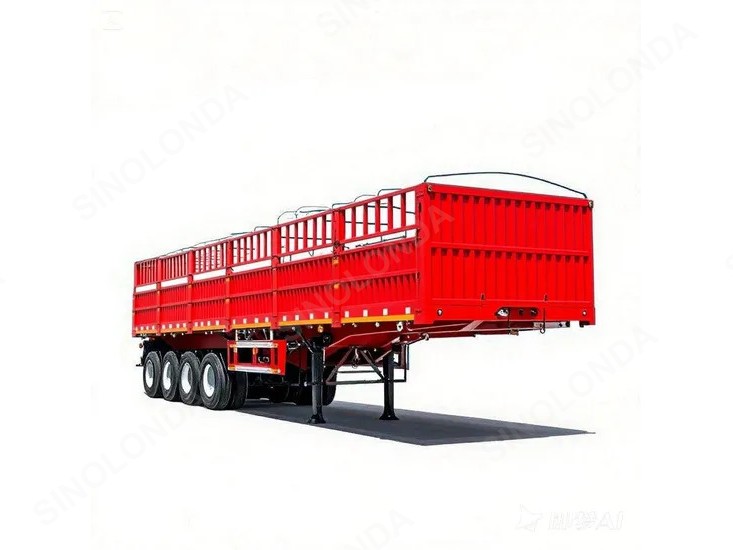
Architectural Principle & Configuration Variants
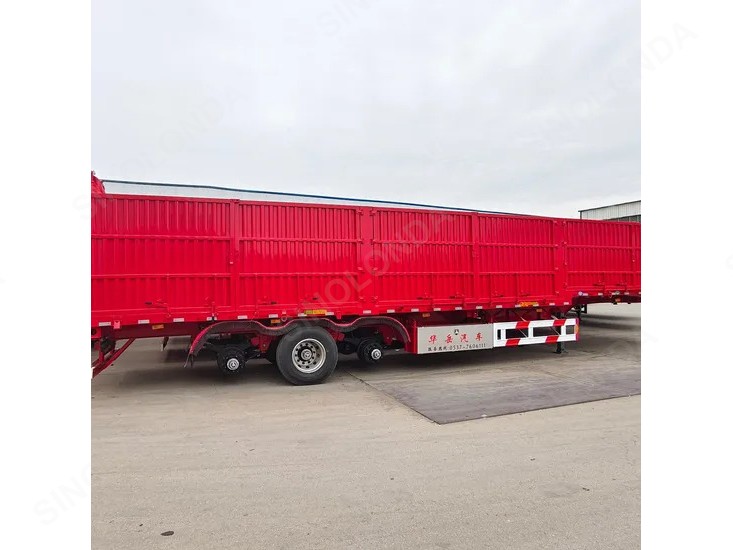
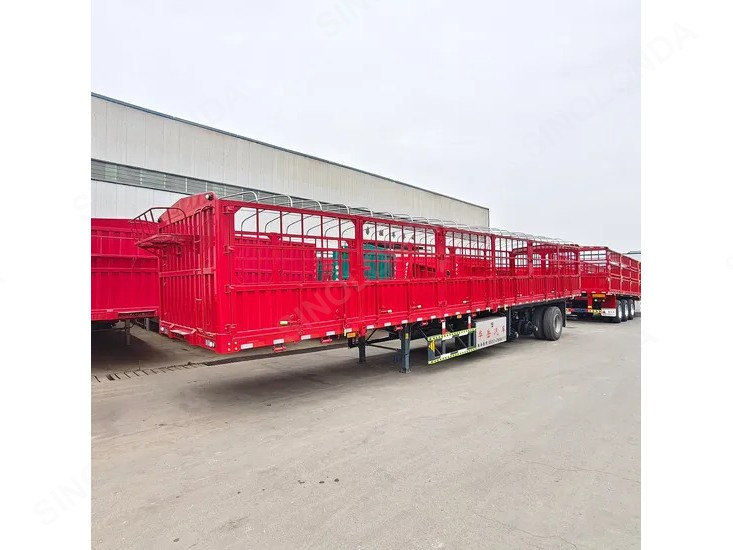
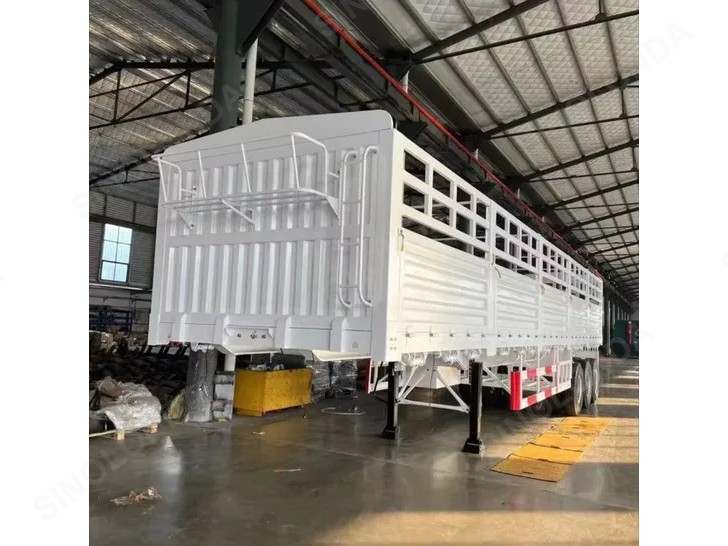
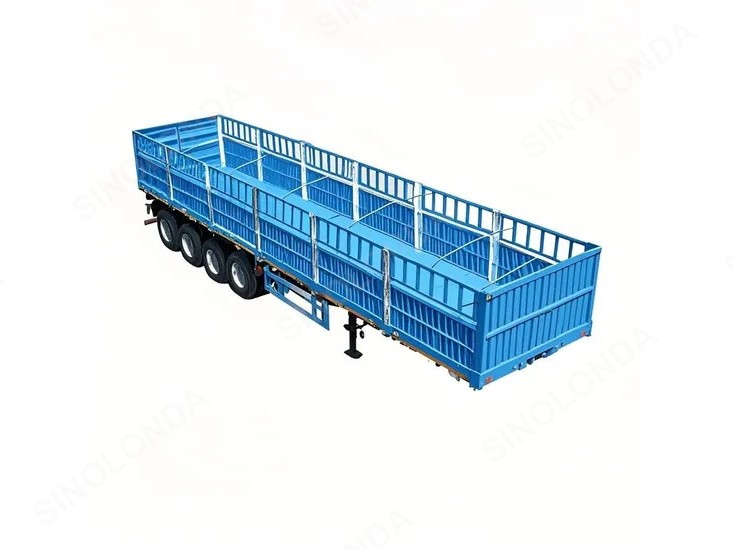
The fence trailer's defining geometry is its post-and-rail boundary. Vertical stakes rise from the deck at intervals—CIMC's sugarcane/livestock specification, for example, cites a 42-rib design to ensure side-wall stability under heavy or shifting loads. Horizontal rails run between the stakes at one or more heights, forming a fence that contains cargo without presenting a solid aerodynamic or structural face. The base side wall beneath the fence line is typically a low solid panel—600 mm is the widely catalogued standard—with the fence section above it commonly around 1,200 mm, yielding a total side height in the 1,800 mm range on standard models. Fence heights are routinely customisable from 600 mm to 1,600 mm or beyond.
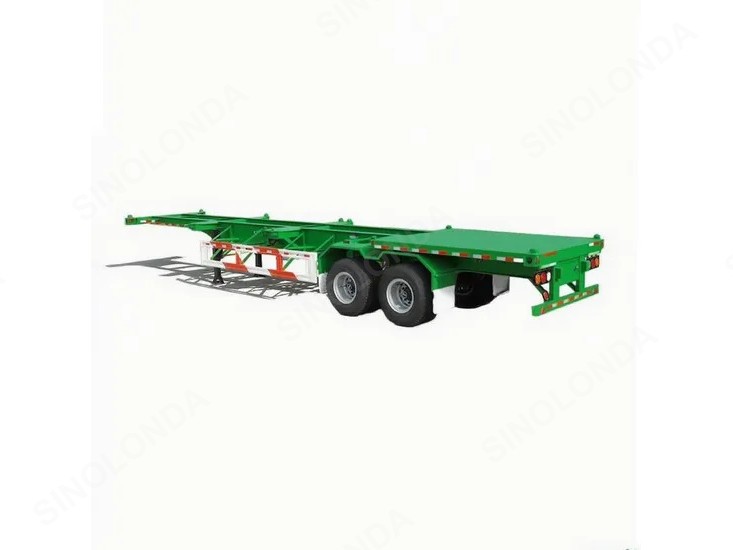
Axle count follows the usual 2-, 3-, or 4-axle pattern, with payload bands spanning roughly 20–40 tonnes (2-axle), 30–60 tonnes (3-axle), and 40–100 tonnes (4-axle) in CIMC's catalogue structure. Twist-lock provision for container carrying is available on many models—typically 4, 8, or 12 sets—allowing the fence trailer to serve container drayage between agricultural or construction legs.
Structural & Running Gear Specifications
Chinese export fence trailers are built around Q345B main beams as the baseline, with T700 or Q460C high-strength steel offered as an upgrade path where lower tare weight or higher bending resistance is required. A representative 500 mm I-beam specification uses plate thicknesses in the range of 14 mm upper flange / 8 mm web / 16 mm lower flange, though heavier configurations scale to 18 mm / 12 mm / 20 mm on 4-axle high-capacity builds. The cargo floor is characteristically 3 mm checkered plate, providing grip for bulk and bagged loads.
Axles are sourced from FUWA, BPW, SAF, or CIMC in 13 T, 16 T, or 20 T ratings, with mechanical leaf-spring suspension as the standard (often a 90 mm × 13/16 mm × 10-layer pack) and air suspension available for load-sensitive or height-controlled duty. Kingpins are JOST 2-inch or 3.5-inch units in bolted or welded form, landing gear is rated at 28 tonnes, and braking follows a dual-line air system with T30/30 chambers and optional ABS. A notable finish-level differentiator is hot-dip galvanised fencing.
Ventilation As A Functional Requirement
The open fence architecture is not merely a weight-saving or cost-saving choice; for a significant slice of its cargo base, ventilation is a functional necessity. Hualu's application note states the point directly: the open fence structure "guarantees ventilation for farm produce, avoiding damp and spoilage". Jinfeng frames the same advantage as "exceptional ventilation" combined with easy side and top loading access. For livestock transport, the airflow through the stake-and-rail boundary is a welfare and mortality-risk variable, not a comfort feature. This is why the fence trailer, rather than the solid-sidewall trailer, dominates sugarcane, fresh vegetable, livestock, and hay/forage flows where heat and moisture accumulation would degrade the load.
Operating Envelope & Applications
The fence semi-trailer's cargo set is deliberately broad: livestock (cattle, sheep, pigs, poultry), agricultural produce (sugarcane, vegetables, grain, bagged fertiliser, hay bales), construction and industrial materials (steel pipes, timber, machinery, construction aggregates), and palletised or bulk general freight. Its operational habitats are farm-to-market and agricultural supply chains, livestock haulage, construction logistics, and mixed freight corridors where the same trailer must handle a fence load on one leg and an open-deck or container load on the next.