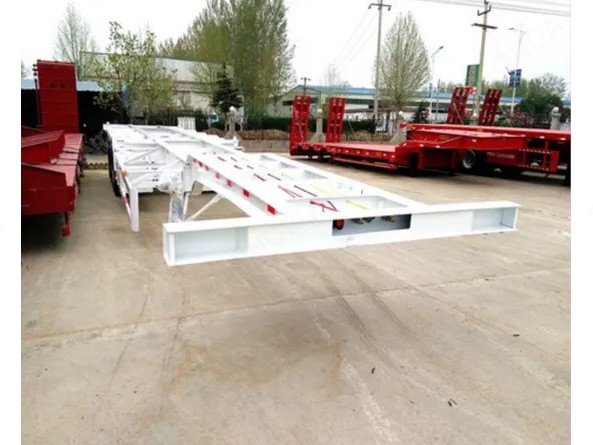
Architectural Principle & Configuration Variants
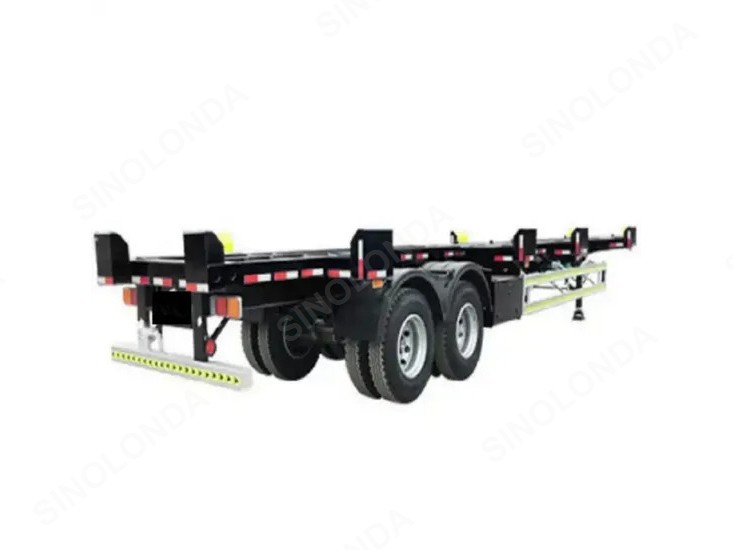
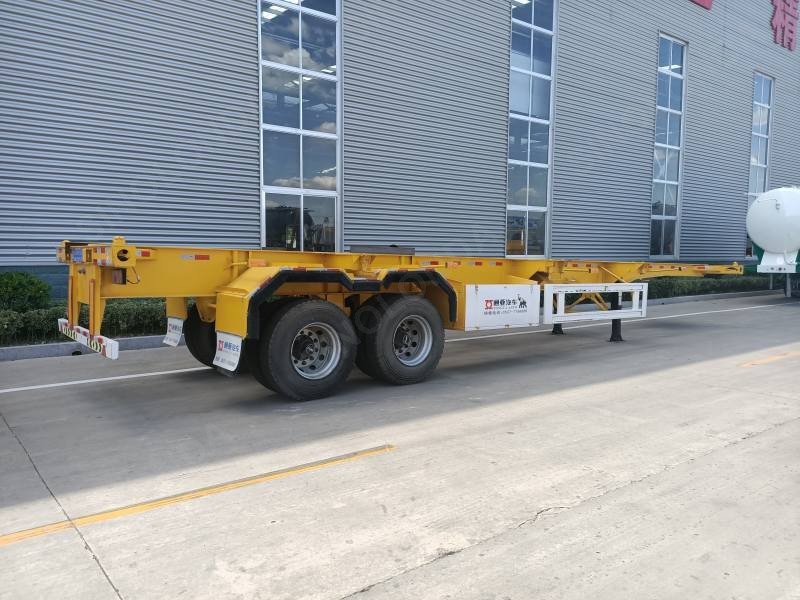
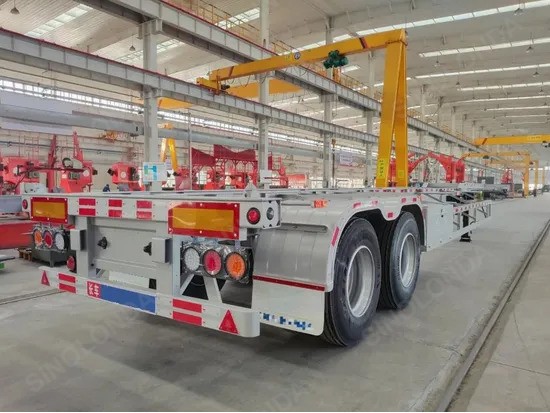
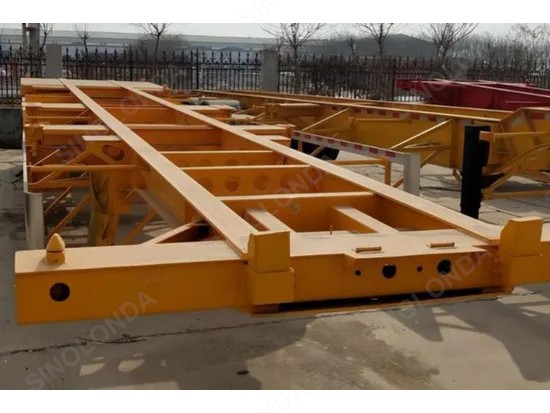
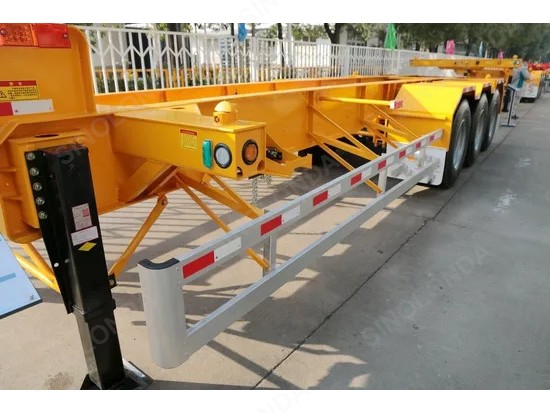
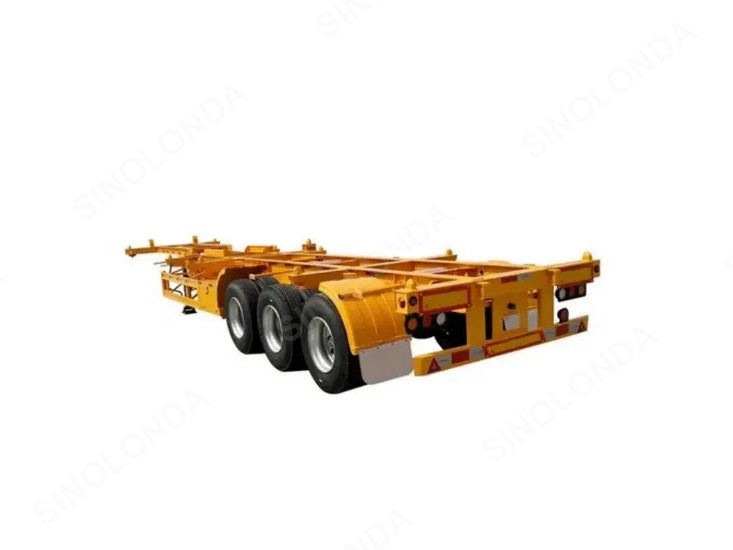
The skeletal frame is defined by its I-beam main girders running the length of the trailer, cross-members, and corner twist locks positioned to align with the container’s ISO corner fittings. Because the container itself contributes stiffness once locked down, the trailer can be optimized for minimal tare weight while retaining the strength to carry 40–60 tonnes in common export configurations.
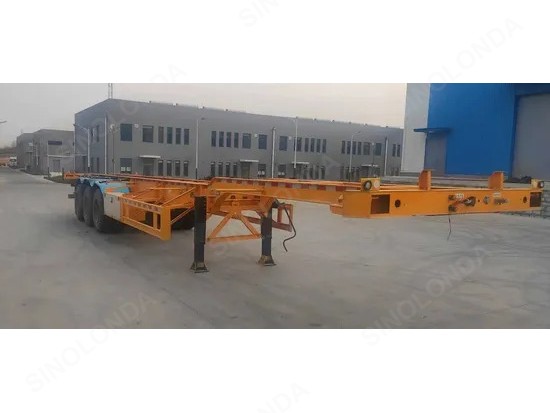
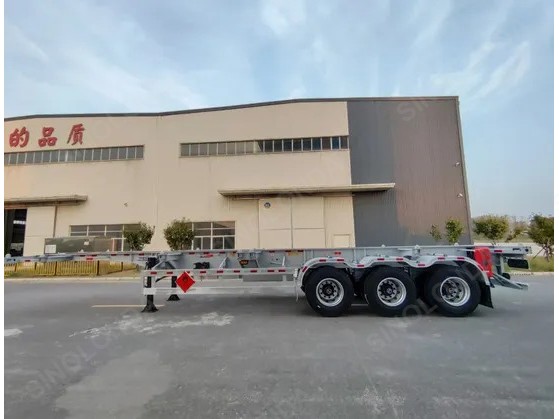
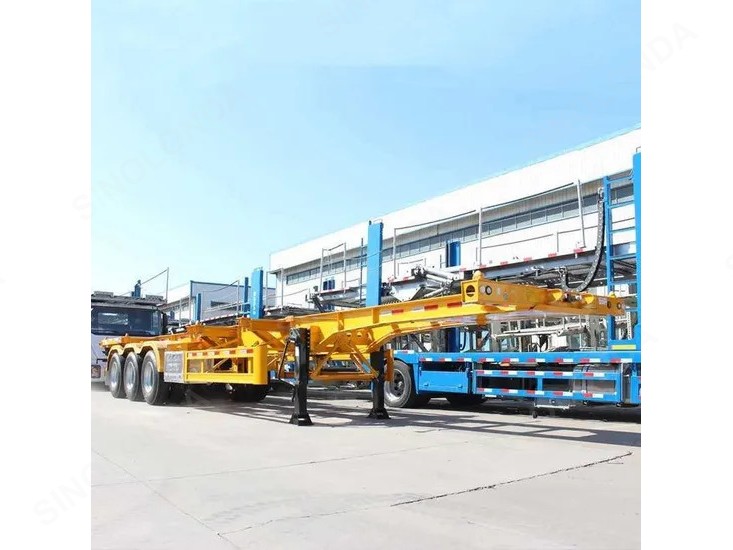
Configuration variants address the diversity of container flows. The fixed-length chassis is dedicated to a single container class—most commonly 40 ft, with 20 ft and 45 ft versions also cataloged. The gooseneck skeleton introduces a stepped neck that lowers the front deck section, improving clearance and weight distribution for taller containers or height-restricted corridors. The sliding or extendable skeletal allows the chassis to telescope or reposition its locking points, enabling one trailer to carry 20 ft, 40 ft, 45 ft, or two 20 ft containers in the same duty cycle. The slider tandem goes further: the rear axle group can be moved fore and aft to redistribute weight between tractor and trailer axles, accommodating heavy containers while remaining within bridge-formula limits. Interlink configurations pair two skeletal modules for higher-volume movements, and tank-container chassis derivatives lengthen the frame and lower the deck height to stabilize shifting liquid payloads.
Structural & Running Gear Specifications
Chinese export skeletal trailers typically specify Q345B high-strength low-alloy steel for the main beams, with a welded I-beam height around 500 mm and plate thicknesses in the range of 8–18 mm depending on the load rating. Some premium specifications cite T700 or Q550 steel with yield strengths of 550–700 MPa, allowing thinner sections and lower tare weights—commonly 5.8–7.2 tonnes for a 40-ft tri-axle unit.
The running gear is built around 2 to 4 axles, with 13 T or 16 T capacity per axle from FUWA, BPW, or SAF, matched to mechanical leaf-spring suspension (often a 10-piece spring pack) or air suspension for load-sensitive or height-adjustable duty. Landing gear is typically rated at 28 T, and the kingpin follows the common 2-inch (50 mm) or 3.5-inch (90 mm) interface, frequently in JOST bolt-in or detachable form.
Securing System & Interoperability
The functional heart of the skeletal trailer is the twist-lock system. Each lock is a rotating connector that engages the corner casting of an ISO container; when the handle is turned, the lock head rotates 90° to capture the container against the chassis. Twist locks are specified in 4, 8, or 12 sets, in manual, automatic, or telescoping configurations, allowing a single chassis to serve multiple container lengths and to secure two 20-ft units simultaneously.
The dimensional and strength requirements of the corner fittings that these locks engage are governed by ISO 1161, which defines the basic dimensions, functional requirements, and strength criteria for series 1 freight container corner and intermediate fittings. Twist locks themselves are commonly cited as ISO 1161-compliant or ISO 1496-aligned, and the container dimensional envelope they serve is anchored in ISO 1496, the standard to which the overwhelming majority of the global container fleet is built.
Operating Envelope & Applications
The skeletal semi-trailer is purpose-built for intermodal container logistics: port drayage between marine terminals and inland depots, rail-yard interchange where containers move between train and truck, and cross-dock and distribution-center shuttles where containers are staged for unpacking. Its natural payload is the ISO container in 20 ft, 40 ft, and 45 ft lengths, including reefer containers (with underslung genset provisions in some configurations) and ISO tank containers in specialized derivatives. Because the chassis carries no cargo directly—only the container—it is also the platform through which the global container fleet interfaces with the road network: the twist locks at its corners are the physical and standardised connection between the intermodal box and the highway leg of the supply chain.