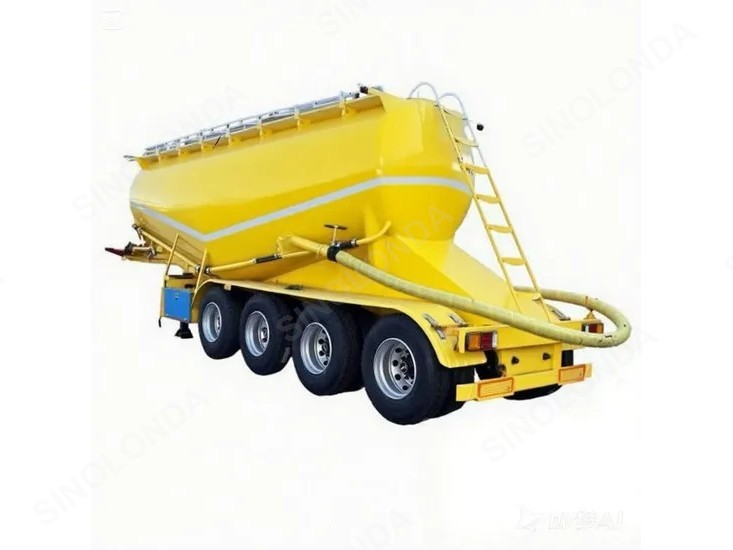
Core Structure And Design Highlights
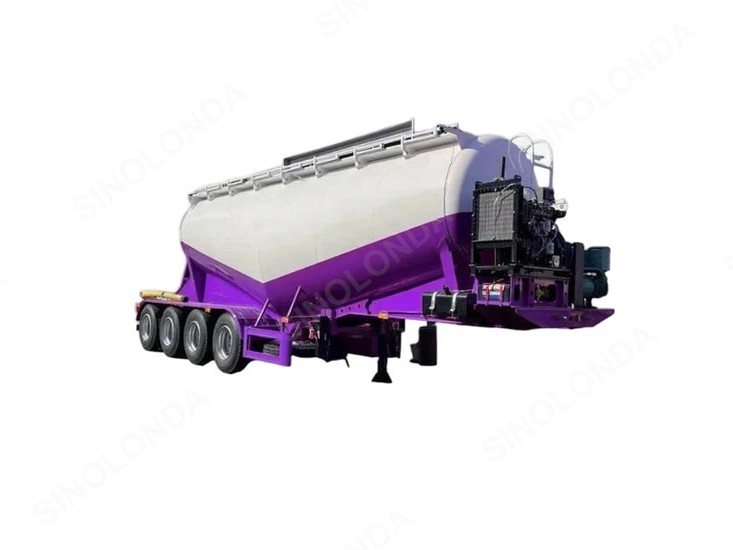
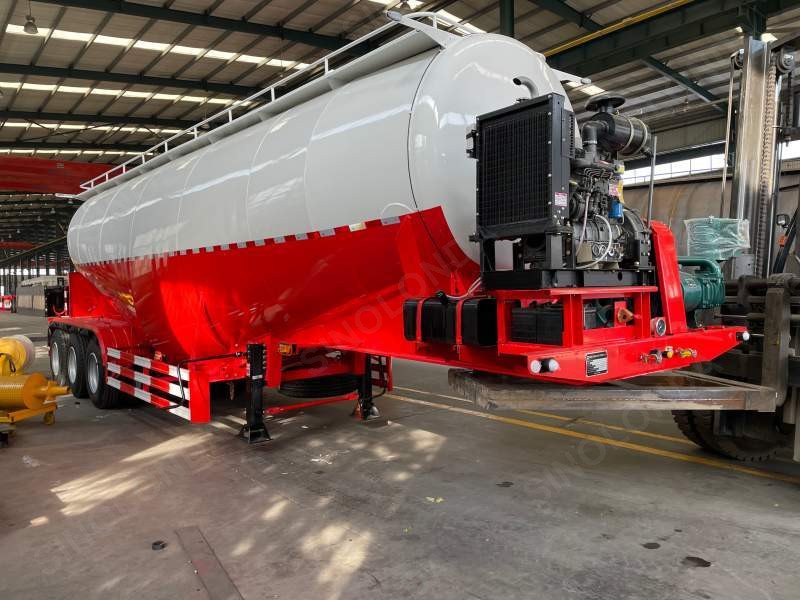
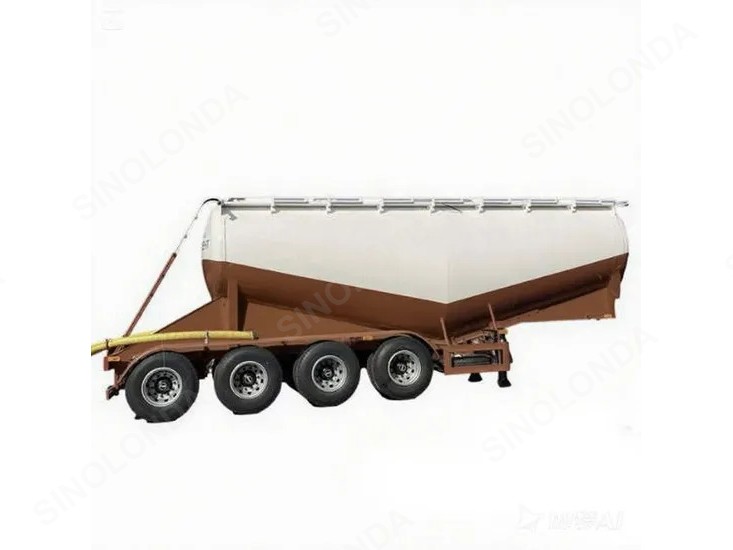
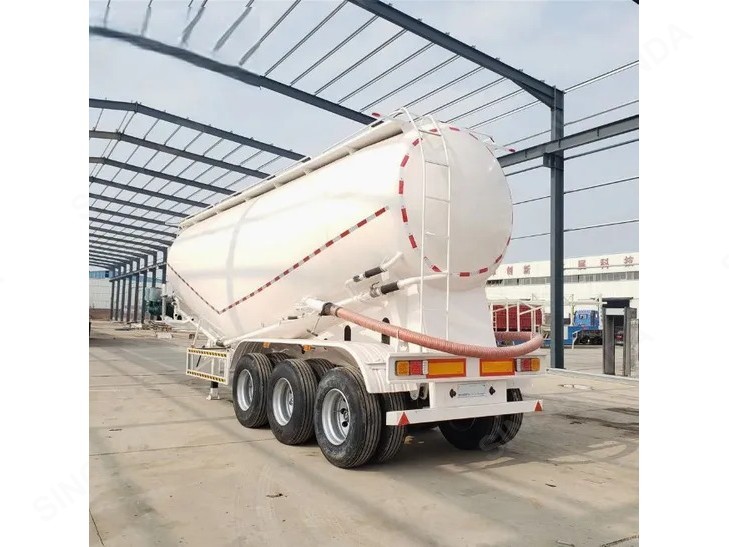
Cement Tanker Semi Trailer consists of a fully enclosed, high-strength tank body mounted on a heavy-duty semi-trailer chassis. Tanks are commonly made of wear-resistant steel or lightweight aluminum alloy, with internal walls polished to minimize material residue and maximize unloading rates. The streamlined cylindrical or elliptical shape effectively disperses internal pressure, while optimized aerodynamics reduce wind resistance to cut fuel consumption. Standard volumes range from 20 to 60 cubic meters, with three-axle configurations being the most popular choice for balancing payload and road compliance.
Efficient Pneumatic Unloading System
Cement Tanker Semi Trailer defining feature is the pneumatic discharge mechanism. An on-board or external air compressor fluidizes the dry powder inside the tank, turning it into a flowing state that can be blown through pipelines to designated heights or distances. This process typically completes full unloading within 30 to 60 minutes, with residual material kept below 0.3%. Some models also offer mechanical spiral unloading options for scenarios where no external air source is available.
Advantages Over Traditional Transport
A Cement Tanker Semi Trailer, Compared with bagged cement transport, the fully sealed design eliminates dust leakage, reduces packaging waste, and improves overall environmental performance. It also cuts loading and unloading labor costs dramatically, while the optimized chassis and suspension system adapt to complex road conditions, ensuring stable, safe, and low-loss operation across long-distance bulk material distribution routes.