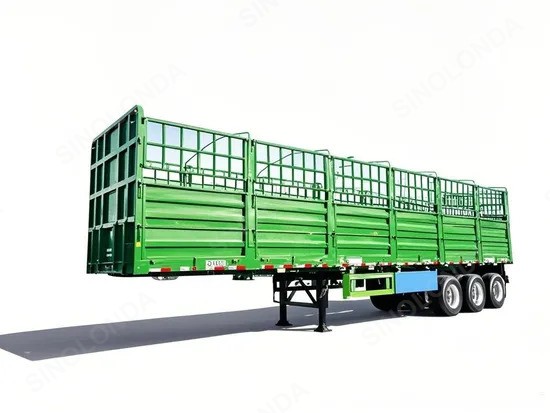
4 Axles Fence Semi-Trailer
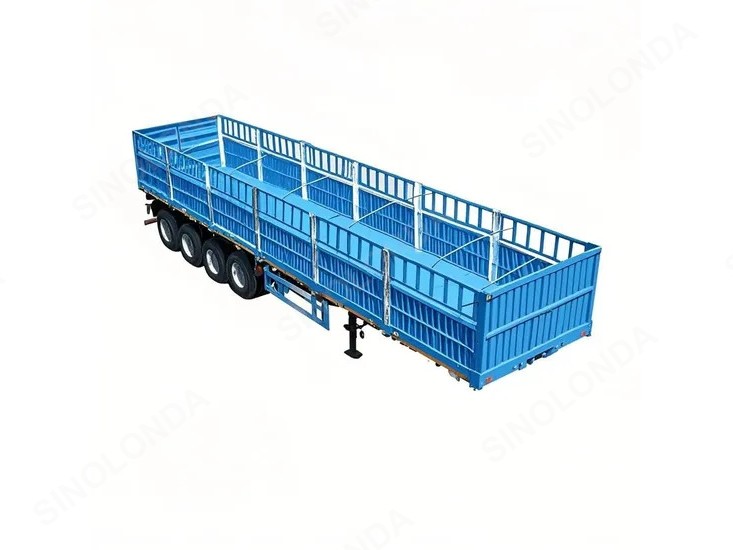
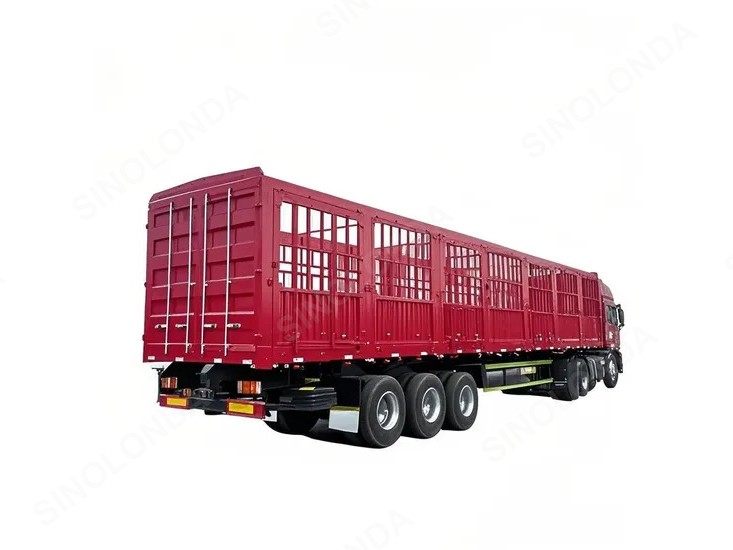
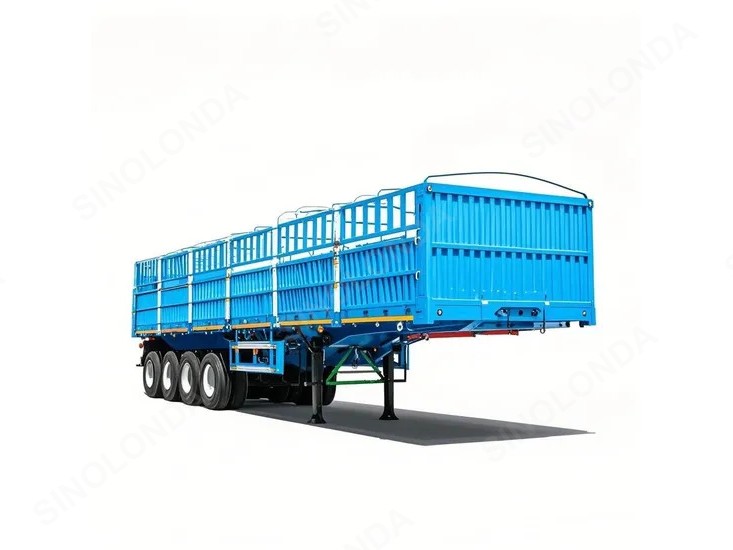
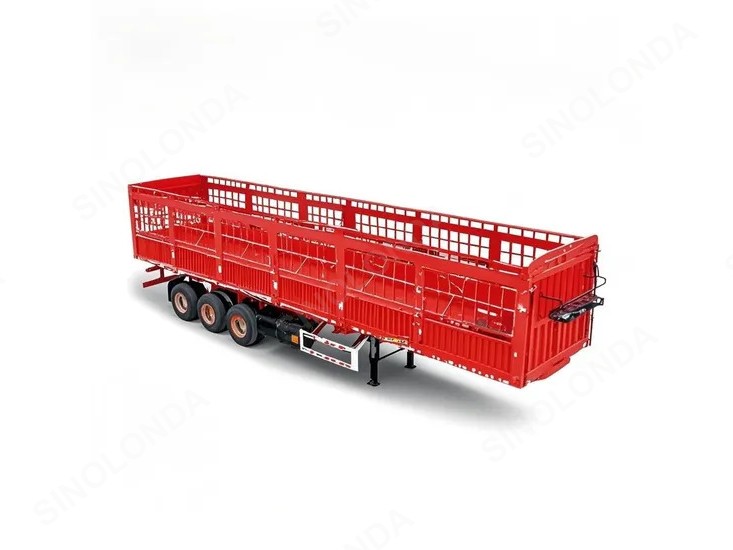
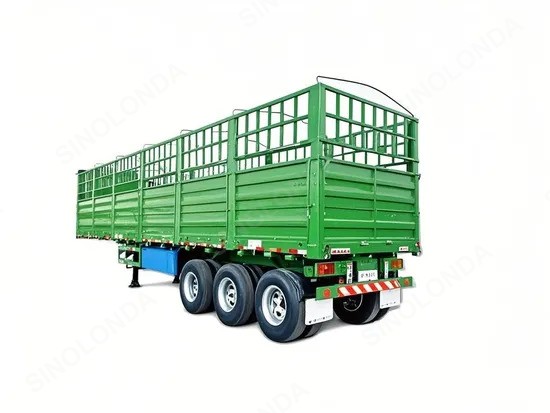
A 4-axle fence semi-trailer is the heavy-capacity extension of the fence-trailer concept: the same open, stake-and-rail containment structure, but carried on four axle lines instead of three. The additional axle is a weight-distribution strategy. It spreads a 60–80 tonne payload (or higher, on heavy-duty builds) across 16 tyre contact points, keeping per-axle loads within regulated limits on long-haul routes where a tri-axle group would be legally or mechanically marginal.
How The Fence Structure Works On A Four-Axle Chassis
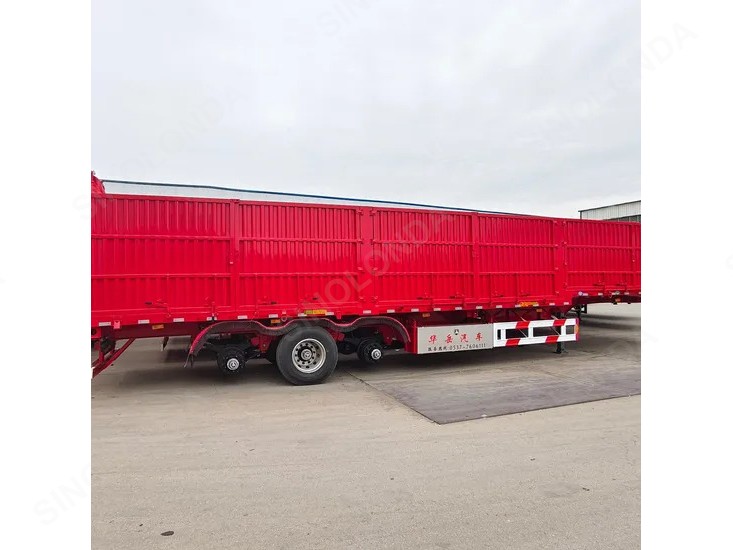
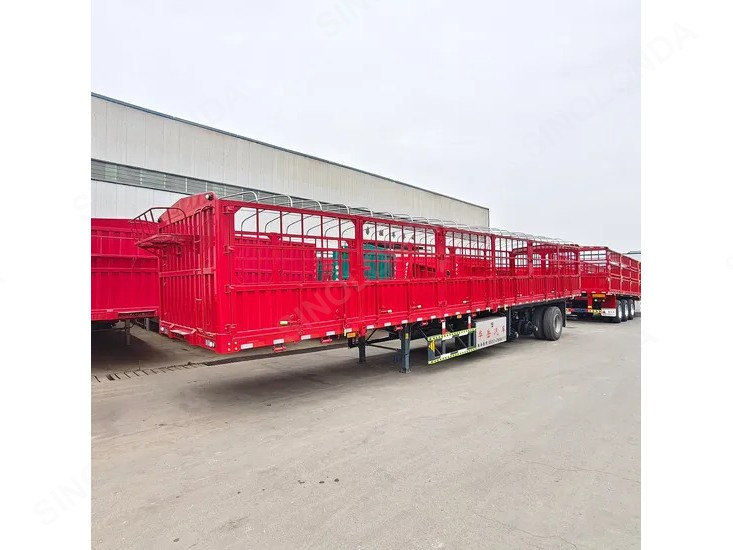
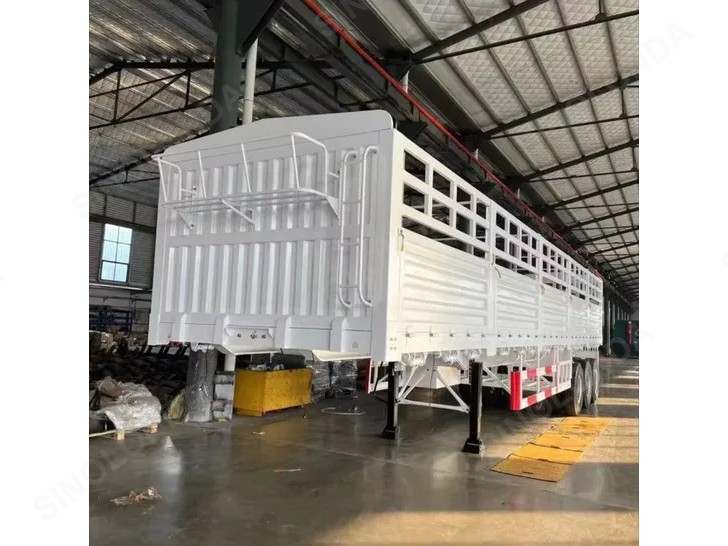
The fence system itself remains modular. Side stakes or panels may be fixed, removable, or combined with a lower solid side wall—a common configuration pairs a 70 cm solid side wall to block road debris and wind with an 80 cm fence above it for livestock or bulky cargo containment. Fence heights are customizable, with quoted ranges spanning 1,500 mm to 2,200 mm depending on the cargo profile. Removable panels allow conversion toward flatbed or container duty; many listings specify 12 twist locks for this dual-use capability.
The open fence layout serves a specific operational purpose that a solid sidewall cannot: continuous airflow through the load, which matters for agricultural produce, feed, and livestock that would otherwise sweat or deteriorate in transit. At the same time, the rails and stakes retain bagged goods, grain sacks, and loose materials that would spill from a bare flatbed.
Configuration Decisions
The first choice is fence operating mode: fixed stakes for structural simplicity, removable panels for flatbed/container conversion, or a side wall + fence combination for operations that need both debris shielding and live-cargo containment. Fence height should track cargo density—lower fences for dense bagged goods, higher fences for bulky agricultural loads or livestock.
Beyond the fence, the key levers are axle rating (13 t vs. 16 t, driven by regional mass limits and target payload), suspension specification (mechanical leaf spring is the default for rough-road durability; air suspension is occasionally offered but less common on this heavy-duty class), twist-lock count if container backhauls are part of the operating pattern, and first-axle lift to reduce drag and tyre wear on empty or light return legs.
Operational Role
The 4-axle fence semi-trailer is built for operations where payload sits beyond what a tri-axle can legally or comfortably carry, but the cargo does not suit an enclosed van. Typical applications include agricultural supply chains (grain, fertiliser, feed, sugarcane), livestock haulage, building materials, and industrial or mining cargo that benefits from top-loading and side access. The four-axle chassis supplies the load distribution and braking stability needed for these weights on highways and rougher routes, while the fence body preserves the airflow, loading flexibility, and modular containment that define the trailer type. In effect, it is a high-payload containment platform: more legally usable capacity than a 3-axle fence trailer, without the fixed envelope of a box or the spill risk of a bare flatbed.
Parameters
|
Model
|
4 Axles Fence Semi-Trailer
|
|
Dimension(mm)
|
13000/12500/12000×2500/2550×3380/3580/3780/3980
|
|
Vehicle Weight
|
7.6T-9.6T
|
|
Loading Capacity
|
40-60T
|
|
King Pin
|
2"(50mm)/3.5"(90mm)
|
|
Axle
|
4*13T FUWA Axles
|
|
Tire
|
Vacuum tire 12R22.5*16
|
|
Main Beam
|
Q345B steel
|
|
Landing Gear
|
Single side operation,heavy duty
|
|
Suspension System
|
Leaf Spring suspension
|
|
Steel leaf spring
|
90(W)mm*13(Thickness)mm*8pcs
|
|
Braking System
|
Dual line pneumatic brake,with hose and connector
|
|
ABS
|
Optional
|
|
Electronic System
|
Rear light, rear reflector, turn indicative light, side reflector, fog lamp,
number plate light |
|
Painting
|
Complete chassis sand blasting to clean rust, 1coat of Environmentally
anticorrosive prime, 2coats of baking varnish. |
|
MOQ
|
1 Unit
|