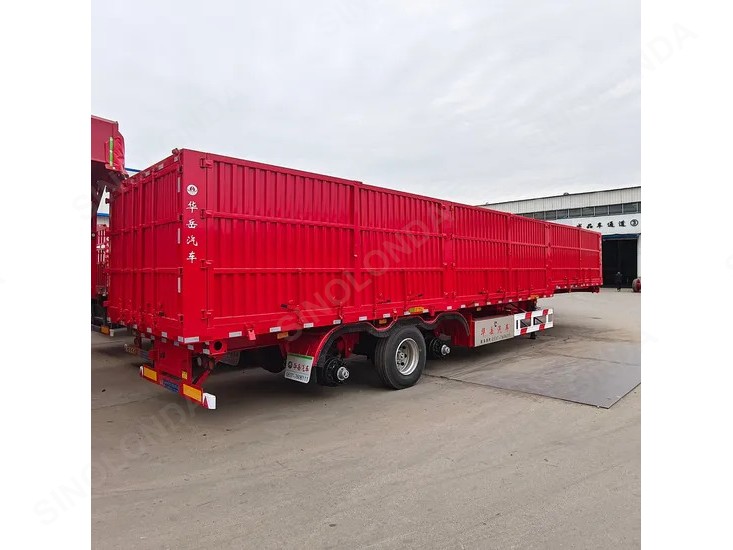
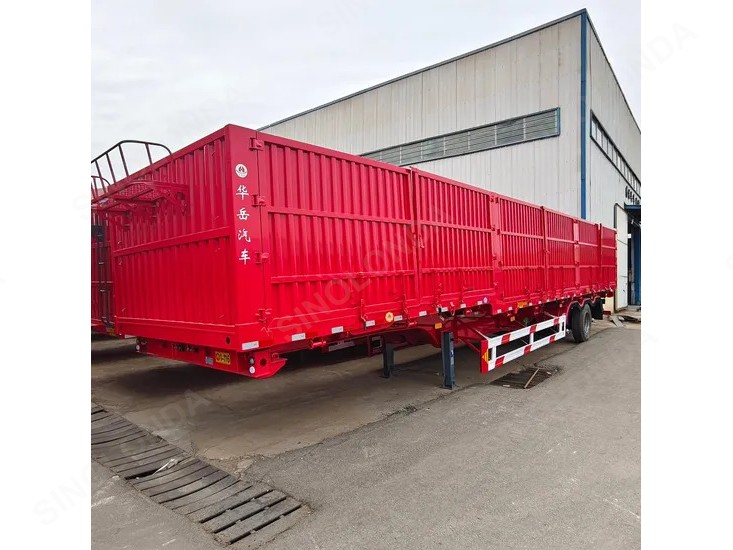
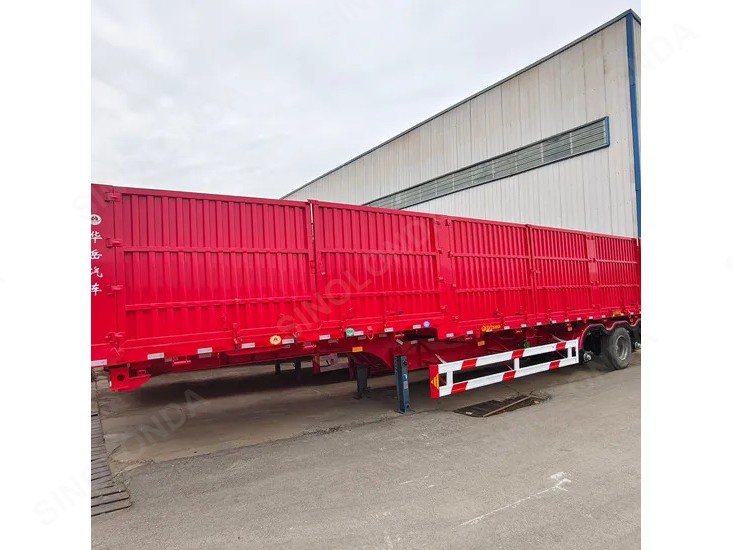
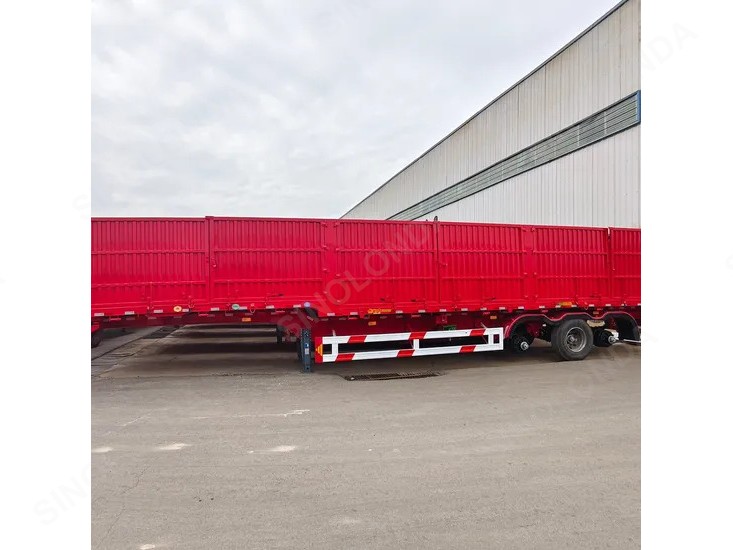
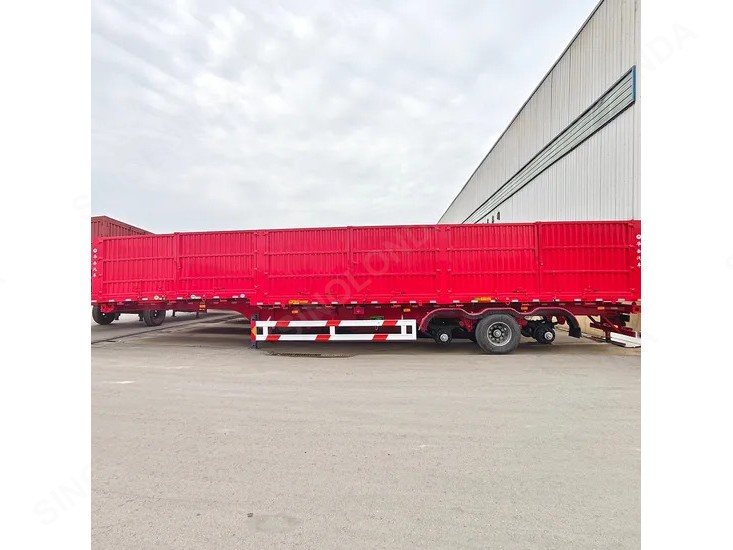
3 Axles Fence Cargo Semi-Trailer
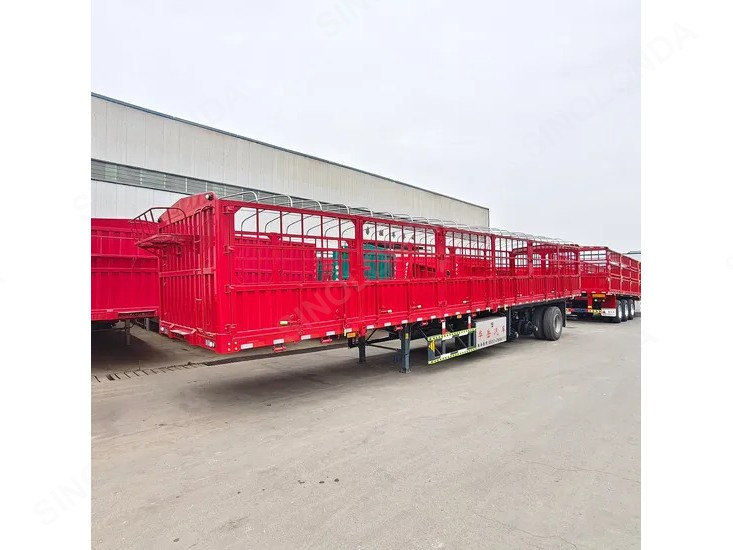
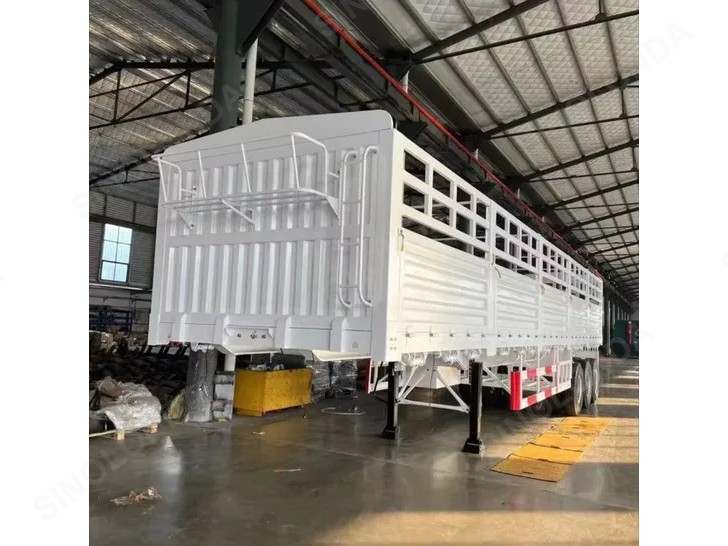
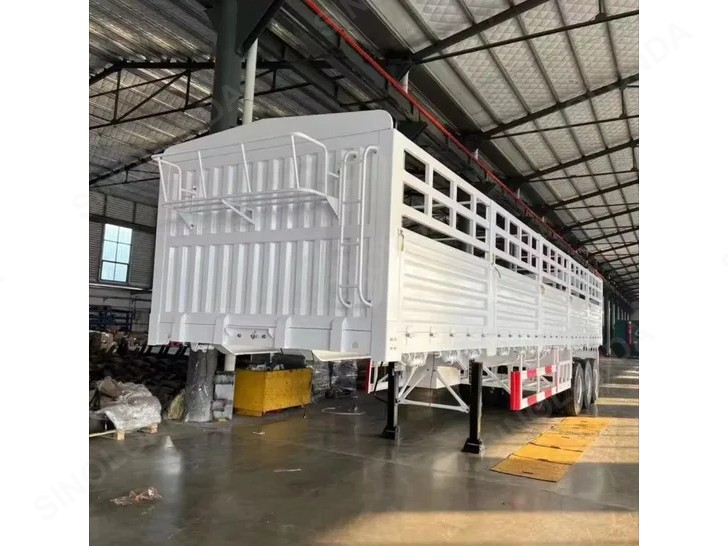
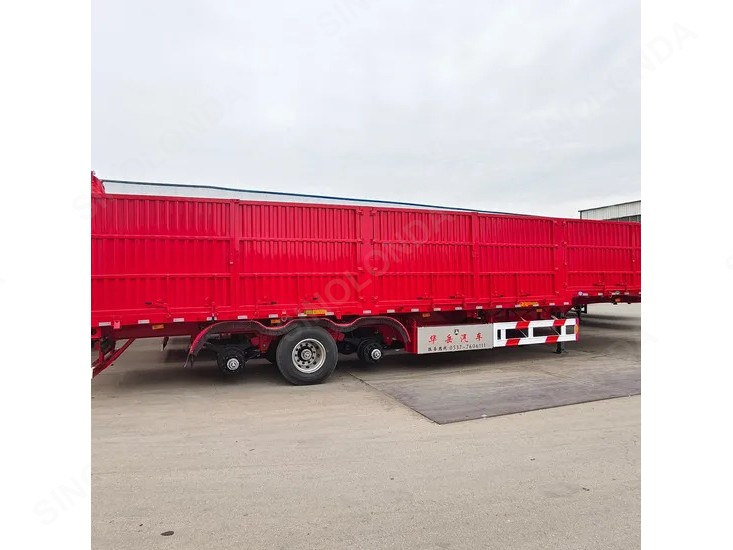
A 3-axle fence cargo semi-trailer is a flatbed trailer surrounded by a fence or stake structure—vertical posts with horizontal rails or removable side panels—rather than fully enclosed walls. This open-but-contained design serves a distinct purpose: it keeps loose, bulky, or living cargo from spilling or shifting during transit while still allowing airflow, top loading, and side access when panels are removed or lowered. It is particularly common in agricultural, livestock, and general bulk haulage where a fully enclosed van would be impractical.
How The "Fence" Structure Works
The fence system is built around removable or collapsible side walls made of steel rails, stakes, or corrugated panels mounted between vertical posts. Unlike a fixed sidewall trailer, the fence configuration is inherently modular. The lower section often functions as a conventional drop-side or sidewall (typically 600 mm), while an upper fence section—commonly another 600–1,000 mm—adds height and containment. These upper sections can be dismantled independently, so the same trailer can run as a low-sidewall unit for dense cargo, a high-fence unit for light bulky goods, or a near-flatbed for oversized items.
This adaptability is the trailer's defining commercial argument. One asset can cover bagged cement, grain, vegetables, timber, steel, and livestock without permanent structural compromises.
Configuration Levers For Buyers
The first specification choice is fence operating mode: fixed fence panels for maximum structural simplicity and cargo containment; drop-side lower panels with a fixed upper fence for mixed loading workflows; or fully detachable fence sections for maximum conversion flexibility toward flatbed or container duty. Total fence height should be matched to cargo density—low fences for heavy, dense goods and higher fences for light, bulky agricultural or livestock loads.
Beyond the fence itself, the main levers are axle rating (13 t vs. 16 t, depending on regional mass limits and payload targets), suspension type (mechanical for ruggedness, air for cargo protection), twist-lock count if container backhauls are anticipated, and floor thickness for abrasive or heavy-point-load cargo.
Operational Role
The 3-axle fence cargo semi-trailer occupies a practical middle ground. It offers more containment and load security than a bare flatbed—critical for livestock, loose agricultural produce, and bagged materials that would otherwise require extensive manual strapping or tarping. At the same time, it preserves the loading flexibility that a box trailer eliminates: cranes can load from above, forklifts can work from the sides when panels are dropped, and the fence sections can be removed to handle containers or oversized freight. For operators whose freight mix shifts between bulk, livestock, palletized goods, and occasional flatbed work, this adaptability is the trailer’s central value proposition.
Parameters
|
Model
|
3 Axles Fence Cargo Semi-Trailer
|
|
Dimension(mm)
|
13000/12500/12000×2500/2550×3380/3580/3780/3980
|
|
Vehicle Weight
|
7.6T-9.6T
|
|
Loading Capacity
|
40-60T
|
|
King Pin
|
2"(50mm)/3.5"(90mm)
|
|
Axle
|
3*13T FUWA Axles
|
|
Tire
|
Vacuum tire 12R22.5*12
|
|
Main Beam
|
Q345B steel
|
|
Landing Gear
|
Single side operation,heavy duty
|
|
Suspension System
|
Leaf Spring suspension
|
|
Steel leaf spring
|
90(W)mm*13(Thickness)mm*8pcs
|
|
Braking System
|
Dual line pneumatic brake,with hose and connector
|
|
ABS
|
Optional
|
|
Electronic System
|
Rear light, rear reflector, turn indicative light, side reflector, fog lamp,
number plate light |
|
Painting
|
Complete chassis sand blasting to clean rust, 1coat of Environmentally
anticorrosive prime, 2coats of baking varnish. |
|
MOQ
|
1 Unit
|