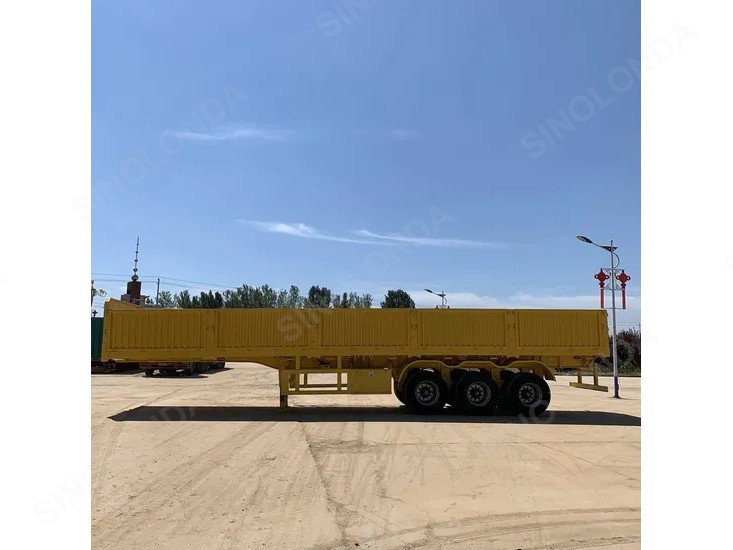
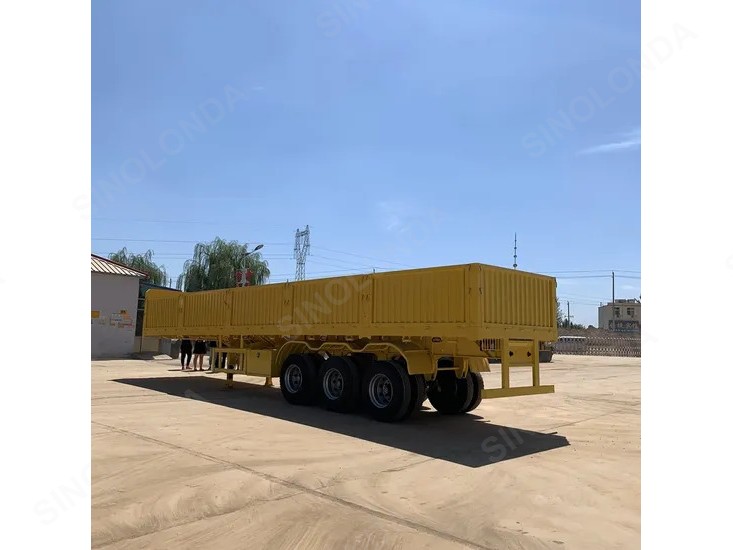
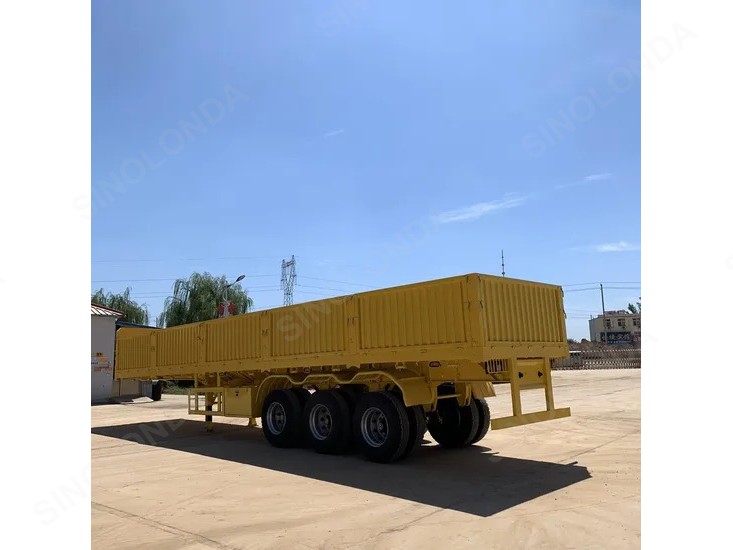
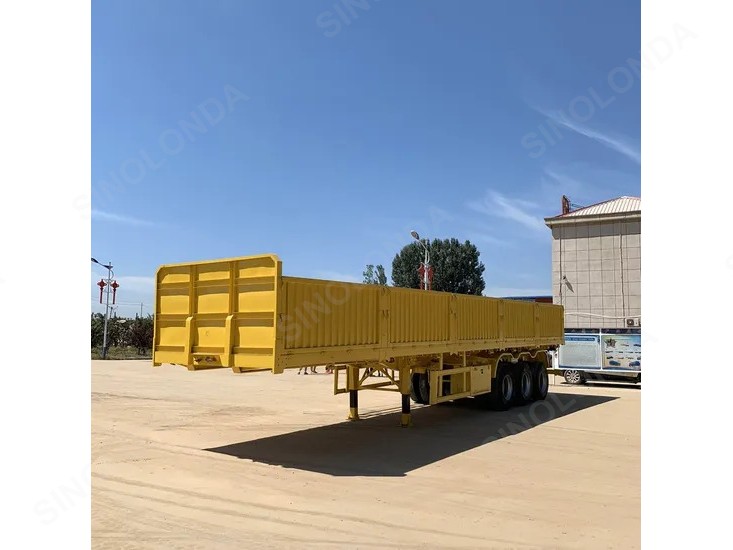
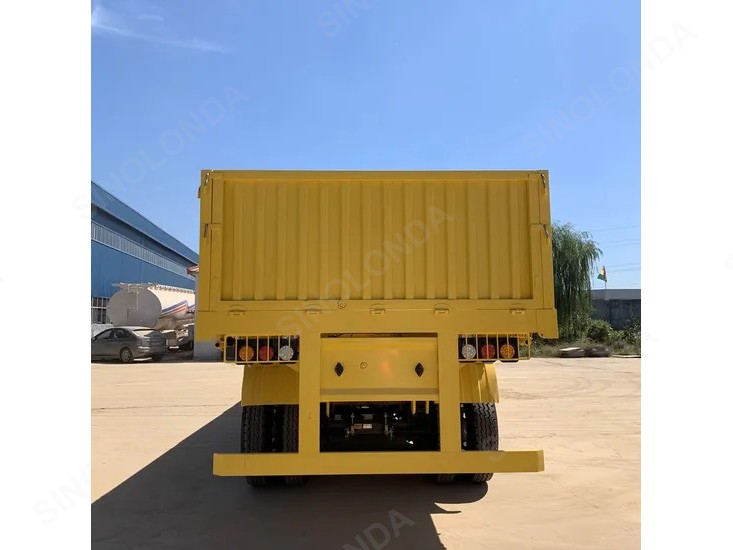
4-Axles 50t Cargo Semi-Trailer
A 4-axle 50-ton cargo semi-trailer is a heavy-duty platform trailer that distributes a 50-tonne payload across four axle lines, rather than the three used on standard-duty trailers. The fourth axle is not merely an extra set of wheels—it is a weight-distribution strategy that enables higher legal payloads on regulated road networks while reducing per-axle stress, tyre wear, and pavement loading. This configuration is widely used across flatbed, sidewall, low-bed, and container-carrying variants, each adapted to a different cargo profile.
Why Four Axles For 50 Tonnes
Under common road regulations, a tri-axle group is typically capped well below what a 50-tonne payload demands once the tractor’s steer and drive axles are accounted for. A quad-axle group allows the trailer’s share of the gross combination mass to be spread over four load points, making 50 tonnes a practical and compliant target in jurisdictions that recognise quad-axle configurations. In effect, the fourth axle converts an otherwise marginal 50-tonne rating into a legally operable one on designated routes.
Principal Body Variants
The cargo semi-trailer label covers several deck configurations built on the same 4-axle, 50-tonne chassis architecture:
4-axle flatbed/container semi-trailer: A bare platform with twist locks for 20 ft, 40 ft, or 45 ft containers alongside general flatbed cargo. One axle is sometimes specified as liftable to reduce drag and tyre wear on empty or light return legs.
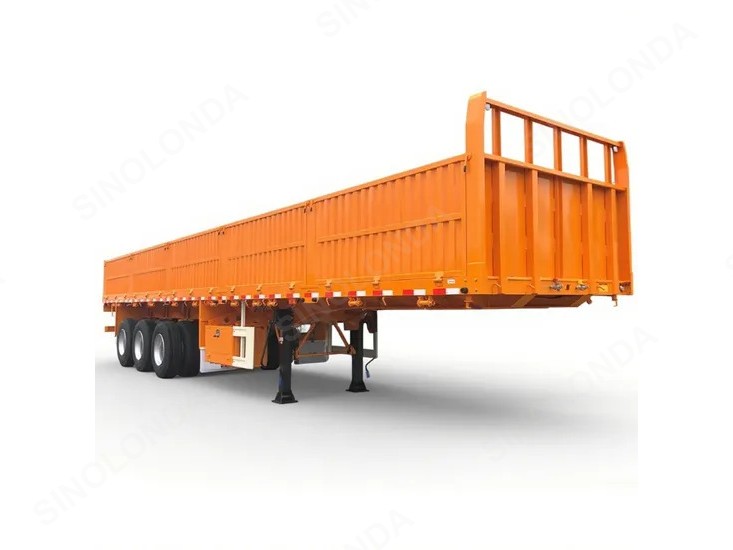
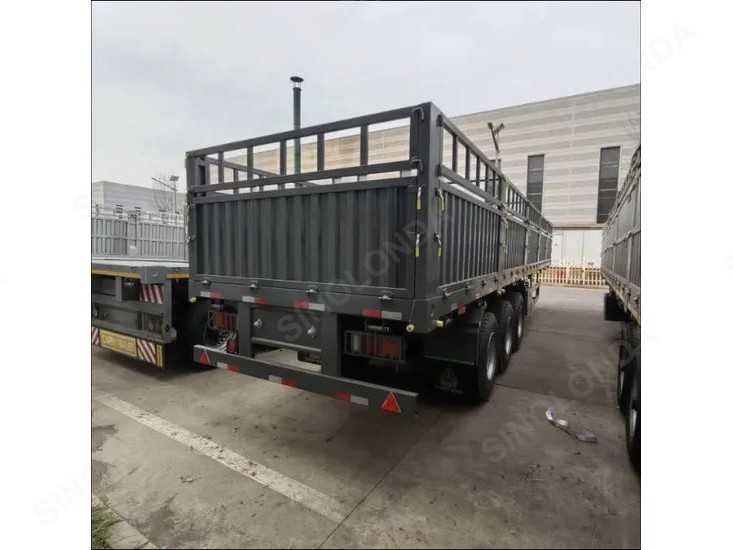
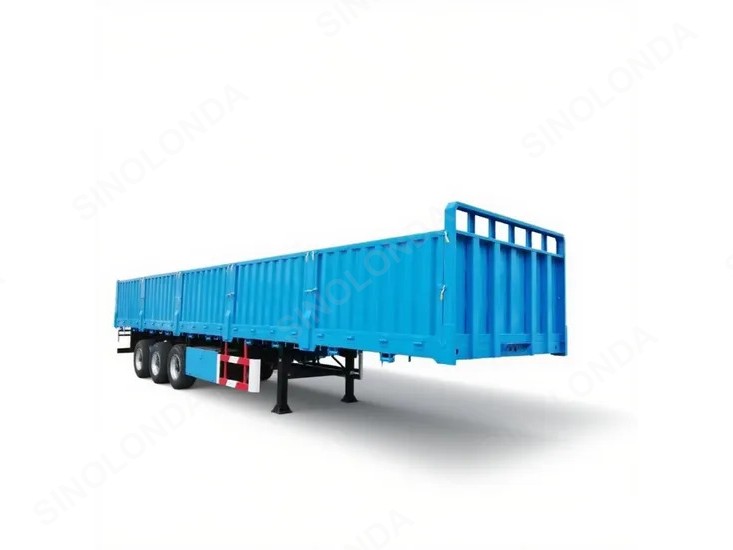
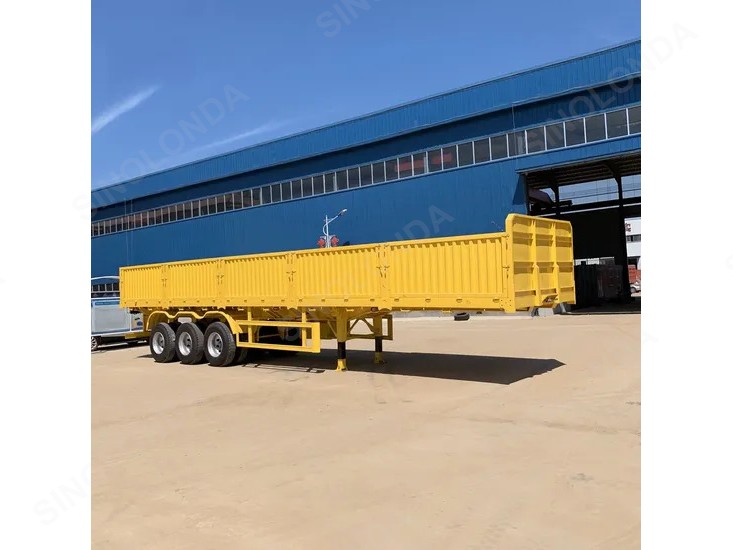
4-axle sidewall cargo semi-trailer: Fitted with 600–1,000 mm side walls (800 mm is a common standard), containing bulk, bagged, or palletised loads while preserving top-loading access. Side walls may be fixed, hinged, or removable depending on the loading workflow.
4-axle low-bed semi-trailer: A dropped deck (often 1,650 mm platform height or lower) that accommodates oversized or tall equipment—excavators, bulldozers, crane sections—while the four axles maintain the 50-tonne rating and a low centre of gravity.
4-axle tipper/side-dump variant: A reinforced cargo box with hydraulic lifting, used for bulk materials such as coal, ore, sand, and grain; payload ratings in this configuration can extend from 50 tonnes to 80–100 tonnes with heavy-duty axle and chassis upgrades.
Configuration Decisions For Buyers
The first decision is body type, because it determines the loading method and cargo envelope. From there, the main specification levers are axle brand and rating (13 t vs. 16 t, FUWA vs. BPW), suspension type (mechanical for rugged simplicity, air for cargo protection and road-friendliness), sidewall height and operating mode (if applicable), container twist-lock count, and tyre size. Regional mass and dimension regulations should be checked before finalising axle spacing, because quad-axle legal recognition and per-group mass limits vary by jurisdiction.
In short, the 4-axle 50-tonne cargo semi-trailer is a payload-compliance solution: the fourth axle makes a 50-tonne rating legally usable on approved networks, while the body configuration can be matched to flatbed, container, sidewall, low-bed, or tipper duty without changing the underlying chassis logic.
Parameters
|
Model
|
4-Axles 50t Cargo Semi-Trailer
|
|
Dimension(mm)
|
13000/12500/12000×2550×3650/3550/3100/2850/2150/1650/1550
|
|
Vehicle Weight
|
7T-8.8T
|
|
Loading Capacity
|
40-60T
|
|
King Pin
|
50#(2") /90#( 3.5") bolt in Type
|
|
Axle
|
4*13T FUWA Axles
|
|
Tire
|
Vacuum tire 12R22.5*16
|
|
Main Beam
|
Material Q345B. Beam height 500mm
|
|
Landing Gear
|
two-speed acting
|
|
Suspension System
|
4 axles mechanical suspension
|
|
Steel leaf spring
|
13mm*90*10pcs
|
|
Braking System
|
Dual line pneumatic brake,with hose and connector
|
|
ABS
|
Optional
|
|
Electronic System
|
Rear light, rear reflector, turn indicative light, side reflector, fog lamp, number
plate light |
|
Painting
|
Complete chassis sand blasting to clean rust, 1coat of Environmentally
anticorrosive prime, 2coats of baking varnish. |
|
MOQ
|
1 Unit
|