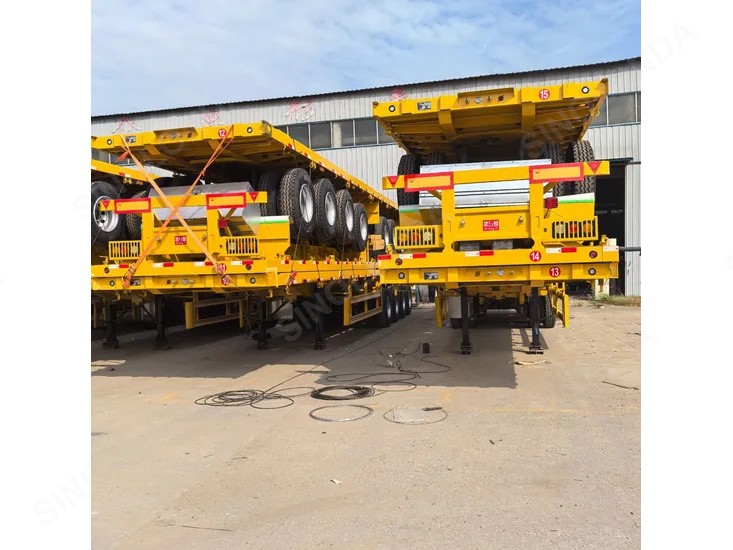
Configuration Variants
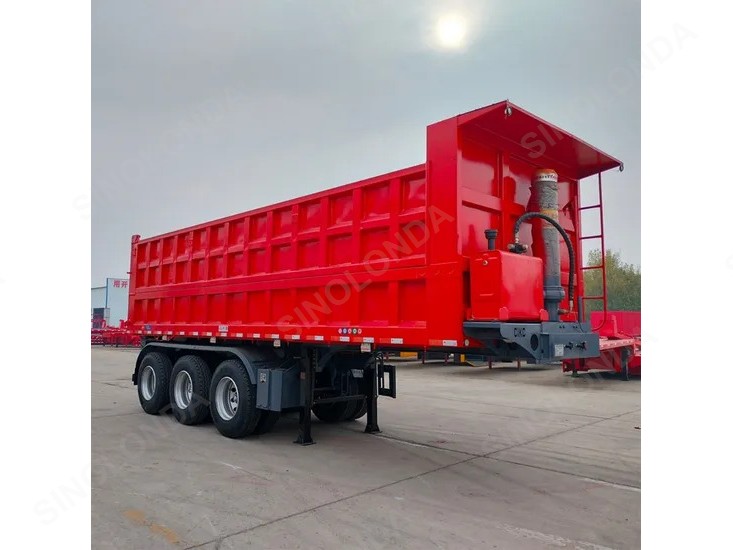
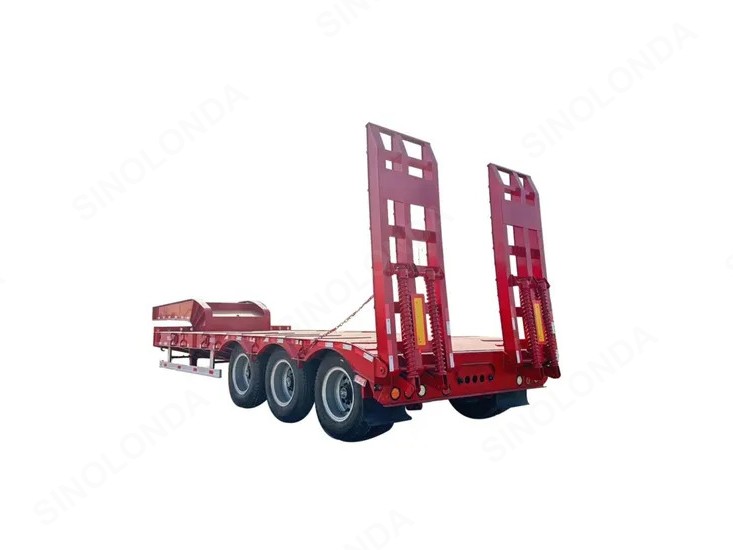
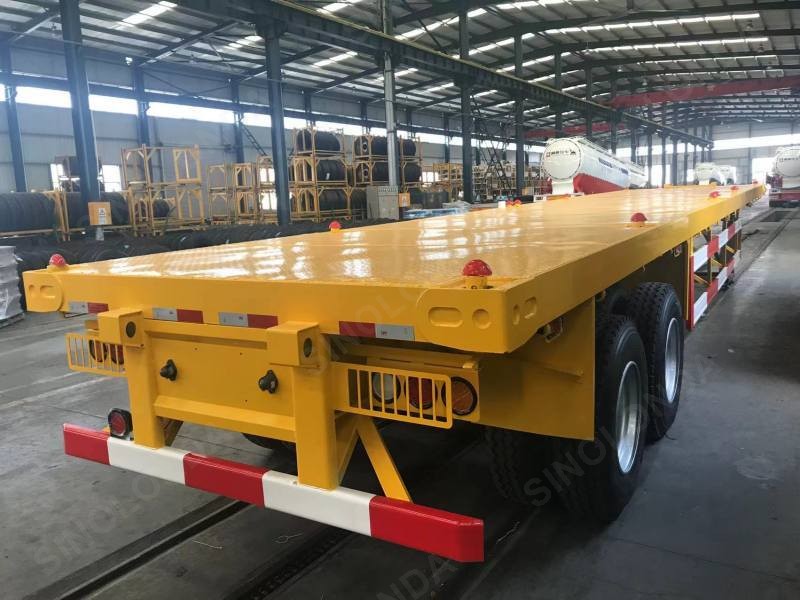
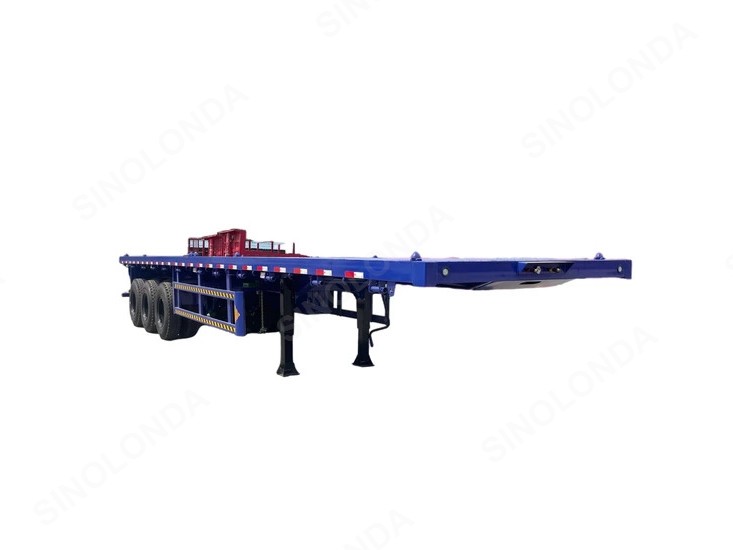
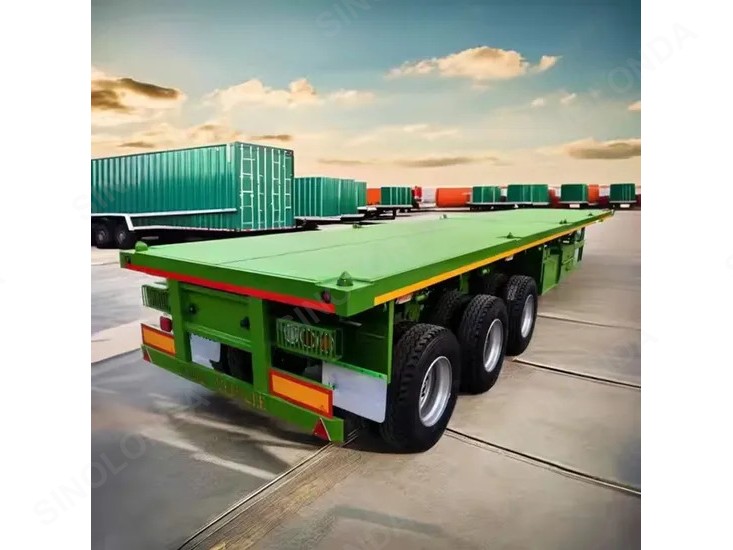
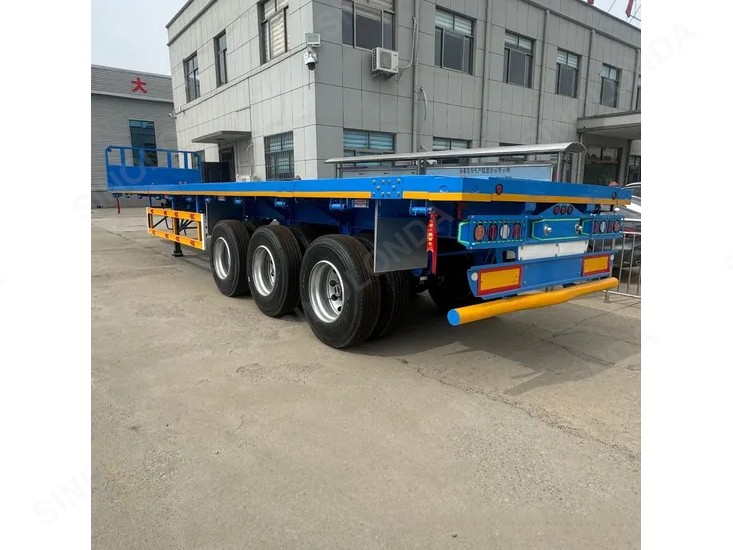
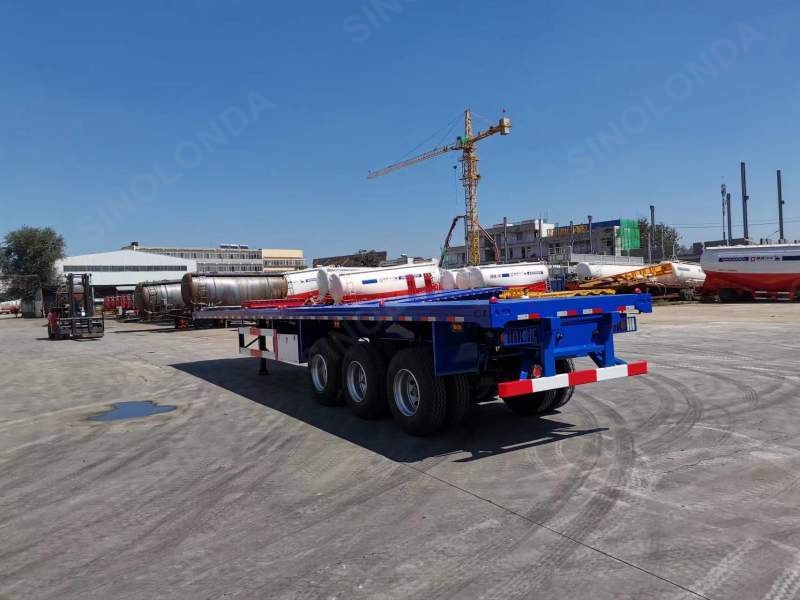
The platform trailer family extends well beyond the basic flat deck. The standard flatbed carries heavy, weather-resistant loads on a single-level deck, typically 48–53 ft long and 96–102 in wide, with payloads commonly cited up to 45–48,000 lb in North American contexts and considerably higher in heavy-duty export configurations. The step deck (drop deck) introduces a two-level profile: the rear main deck sits lower, roughly 38–42 in above ground, creating additional vertical clearance for tall machinery that would otherwise breach legal height limits on a standard flatbed. The extendable flatbed addresses length constraints by telescoping from a nominal 48–53 ft to as much as 80 ft, accommodating long pipes, beams, or structural sections without excessive rear overhang. Further variants include the double drop (lowboy), with a recessed center well for over-height equipment, the removable gooseneck (RGN) for drive-on loading of heavy machinery, and the curtainside flatbed, which adds a retractable weather-protective enclosure while retaining side-loading access.
Technical Architecture
The structural backbone of a flatbed semi-trailer is a welded steel I-beam chassis. Q345B high-strength low-alloy steel is widely specified for main beams, with flange and web thicknesses in the range of 14 mm / 8 mm / 16 mm on heavy-duty models, and deck surfaces typically 3 mm checkered plate. Axle configurations span two to four axles, with 13 T or 16 T capacity per axle from brands such as FUWA, BPW, or SAF, yielding payload ratings that commonly fall between 30 and 60 tonnes for 40-ft platforms, with some heavy-haul specifications exceeding 80 tonnes.
Suspension choices reflect the trade-off between durability and cargo protection. Mechanical leaf-spring suspension—often a multi-layer pack such as 90 mm × 13 mm × 10 layers—is the standard specification for rugged, cost-sensitive duty. Air suspension is available as an option on most platforms, reducing shock loads and vibration for sensitive or high-value cargo, and is increasingly specified in European and premium export configurations.
Container securing relies on ISO twist locks—standardized rotating connectors that engage the corner castings of 20-ft, 40-ft, and 45-ft containers. Twist-lock systems are typically supplied in 4, 8, or 12 sets, in retractable or lift-and-lower configurations, allowing the same trailer to switch between container haulage and general flat-deck cargo. The design and testing of these securing devices are governed by ISO 3874, which specifies function, dimensions, strength requirements, and impact-testing protocols for twistlocks used on carrying vehicles.
Compliance & Interoperability
Flatbed trailers intended for international container flows are engineered around ISO container dimensional and corner-fitting standards, ensuring compatibility with the global intermodal fleet. In markets with mature type-approval regimes, trailer chassis, braking systems, rear bumpers, and lighting are aligned with EEC directives—including 98/91/EEC for chassis construction, 71/320/EEC and 2002/78/EC for braking, 70/221/EC for rear underrun protection, and 76/756/EEC for lighting and signaling. The kingpin follows the 94/20/EEC interface norm, most commonly a 2-inch flange-type pin, with 3.5-inch pins available for heavier applications. For intermodal rail-mounted movements, twist locks may additionally be required to hold AAR certification and demonstrate securement under impact-test conditions.
Envelope Operacional e Aplicações
The flatbed semi-trailer is defined by its versatility across cargo classes: ISO containers in 20-ft, 40-ft, and 45-ft lengths; steel structures, construction materials, and industrial machinery; timber, pipes, and long project cargo; and general freight that cannot be efficiently handled in enclosed vans. Its natural habitats are ports and container terminals, construction and infrastructure project sites, heavy-industry logistics, and long-distance general freight corridors. Where cargo demands weather protection, a curtainside or side-kit configuration preserves the flatbed’s loading flexibility while adding a degree of enclosure; where height or length exceeds legal road limits, step-deck and extendable variants extend the operational envelope without departing from the flat-deck loading principle.
In essence, the flatbed semi-trailer is less a single product than a platform architecture—a steel deck on a compliant chassis, configured through deck geometry, axle count, suspension type, and securing hardware to serve the widest practical range of non-enclosed freight in road and intermodal transport.